Encounter the Rural Lifestyle of Fijian Villages
This section covers rural village life in Fiji, where tradition is stronger than anywhere else. We will cover the specifics of traditional culture that are still as important as ever… the traditional ceremonies, hierarchal social structure, daily traditions and skills and finally deliberate how village life is changing in modern times from outside pressures.
But first…
Have a quick tour of a traditional Fijian village to find your bearings:
Fijian villages are situated all over Fiji, by the coast, on the islands and in the interiors of the mainlands high in the mountains. Villages like Buliya are predominantly self-sufficient, most of the food coming from their own farms and fish coming from the sea or nearby rivers. Freshwater is sourced from local springs, rivers or from the rain. Very little needs to be purchased, only items deemed essential are bought using money earned from selling produce at markets or from money sent by village members or relatives working in the towns. Rural villages are made up of and rely on the resources that surround them; if you are living by the sea, expect to be eating a lot more fish than your friends in the highlands!
Lifestyle
It’s fair to say that village life is much slower than most. There is a real emphasis on community, communal support, religion and traditional values. You can see the syncretism between the old and new more clearly in rural Fijian villages than anywhere else in Fiji because traditions are most prominent and relevant in village settings. It is often the most alien of aspects in traditional village life that are the most special. This section looks at the lifestyle that exists and how it may differ from elsewhere overseas.
Some immediate differences…
Here’s Harry highlighting some of the immediate differences between a Fijian village and our own homes:
Unique Concepts…
Fiji Time
Kerekere
‘Fiji time’ is an affectionate term that summarises the relaxed timekeeping of Fijians. As funny as it sounds, this is a real phenomenon in Fiji and is very present in the village.
If you organise a meeting at 4:00 pm, expect most attendees to turn up at 5:30 pm. This relaxed feeling bleeds into every aspect of village life. When the sun is out and it’s a hot, humid day, what harm can a 40-minute nap do? It’s no wonder Fijians always have a smile on their face.
To reiterate a point that we have already covered; kerekere is a central concept in a Fijian village. Kerekere itself can roughly translate to ‘request’ but really means an unconditional giving. Historically, it would ensure that every member of a village did not go without and can be best understood as the idea that possessions belong to the village rather than the individual/household. This would mean that if one particular evening you ran out of rice, you can just go next door and ask for some and it will be given to you with a smile. As a concept, kerekere best embodies the communal aspect of a village.
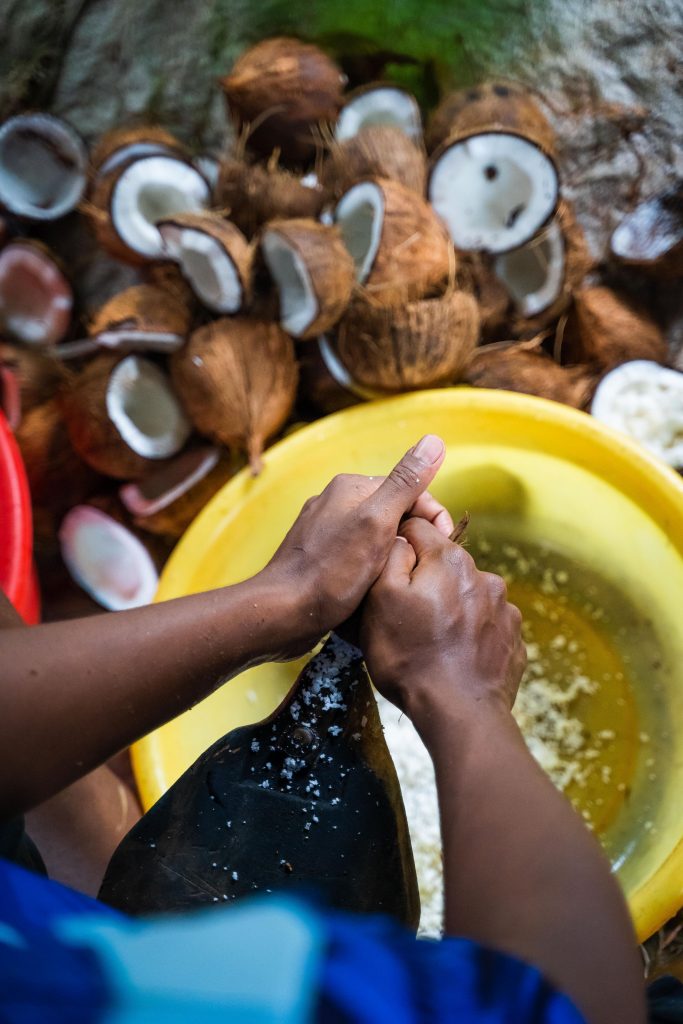
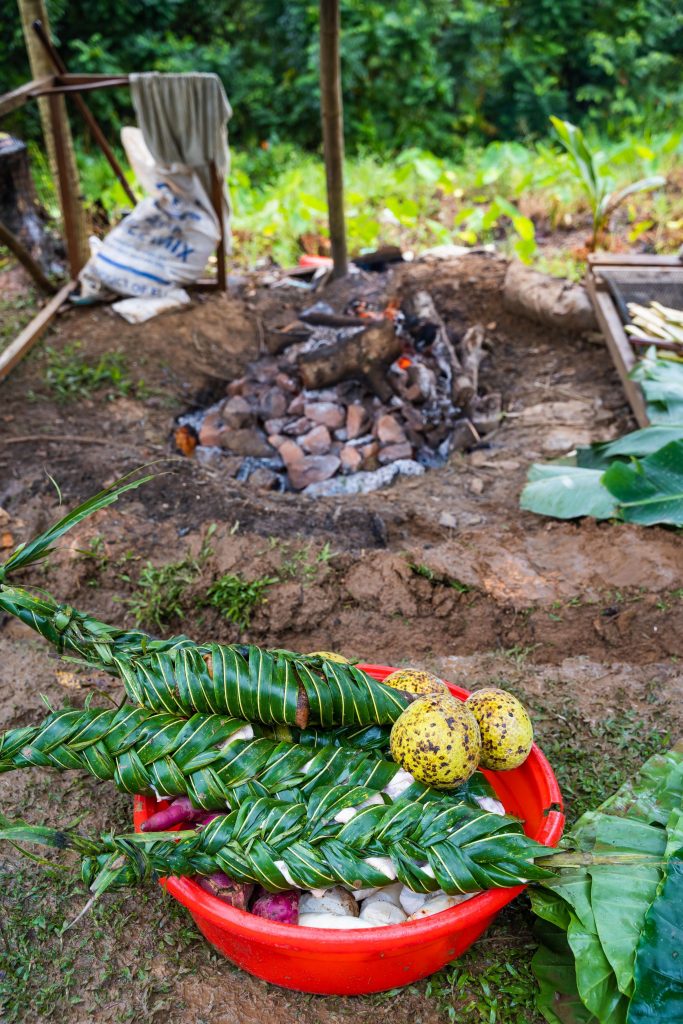
Fijians are early risers, and if you spend a night in a village, expect to hear the first clatter of pots and pans and hushed tones of conversation at around 5.30 am. As a recipient of Fijian hospitality, you may well be given the best, and in some cases only, bed in the house (many people still sleep on woven pandanus mats on the floor). Families often live together or nearby with multiple generations living in one household, all having a role in the house to keep things ticking over.
The House
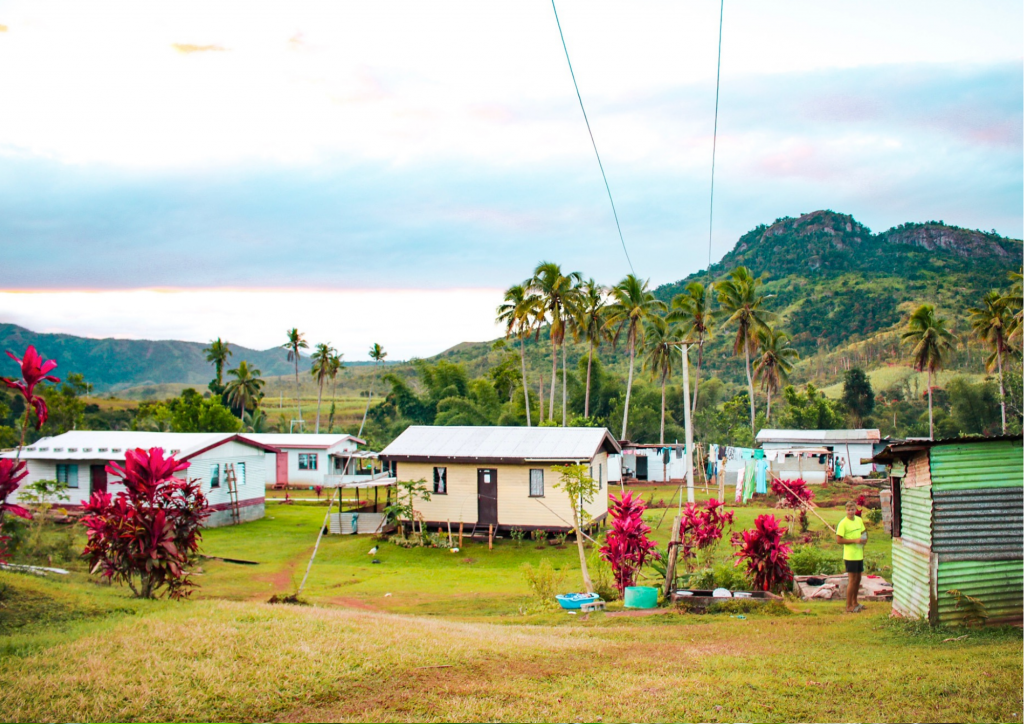
Most homes are no longer built in the traditional thatched bure style but are simple, rectangular, pitched-roof houses made from industrialised materials requiring less maintenance. Although most houses usually have a tap in place and the odd electrical appliance, rural homes may not have electricity or plumbing, and people wash and get water from a communal tap fixed above a concrete square or the local river. Cooking is done over small kerosene stoves or an open fire. Toilets may be of the long-drop variety but villages may also have flushing toilets (especially near the main hall).
Roles in a Fijian Village
Different traditional leadership roles within a village help govern its wellbeing. These roles are respected by the government and they are often asked permission as the vanua if there is to be a new development in their land. Some roles are hereditary through someone’s association with a mataqali and some roles are elected by the village. Below is a list of some of the roles that exist in a Fijian village and their purpose.
Ratu / Turaga
Turaga ni Koro
Mata ni Vanua
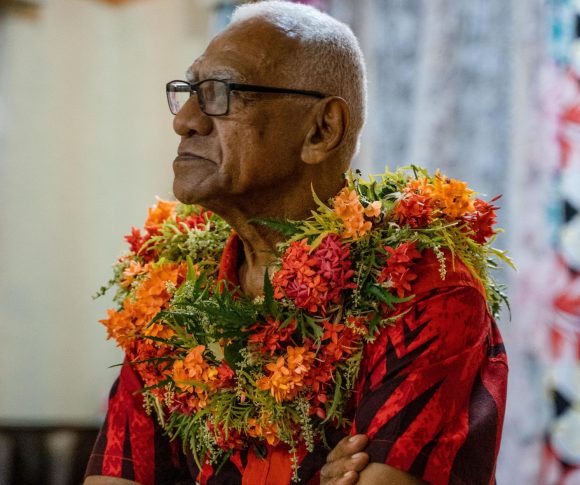
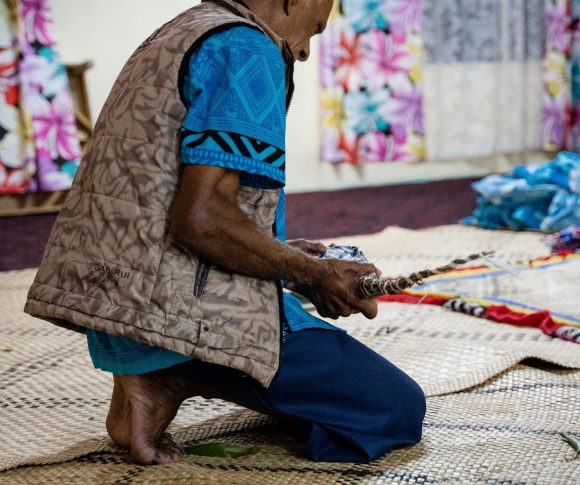
The chief is the executive decision-maker of all things village. He is the eldest eligible member of the particular turaga mataqali and is believed to have the most mana (spiritual power) from the gods, making him a suitable leader. The chief will assume the most respected position during traditional ceremonies and his word is assumed to be almost holy.
The turaga ni koro is a man who is elected by the village to be the ‘headman’. He is the village’s administrator and ensures the smooth running of the village. He will often speak on behalf of the village in ceremonies and is generally one of the most eloquent speakers in the village. It is through the turaga ni koro that outside matters can interact with the village.
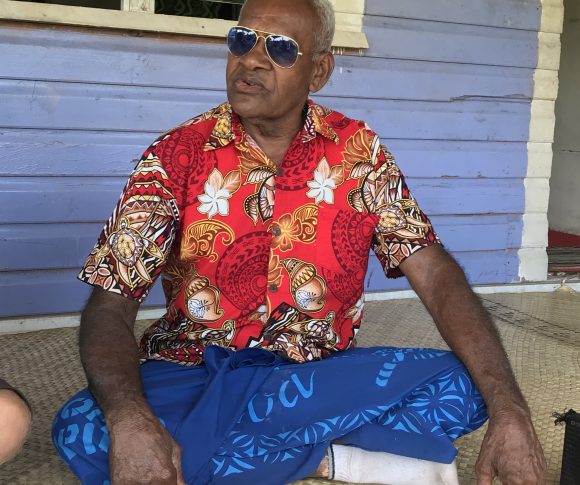
The mata ni vanua roughly translates to ‘ambassador of the land’. Today, they function as the chief’s spokesperson. They are the bridge between the village and the chief, it is through him that news reaches the chief. The mata ni vanua is considered to be a village elder and will sit close to the chief during official ceremonies.
Today… Other Roles also Play a Vital Role in Village Life
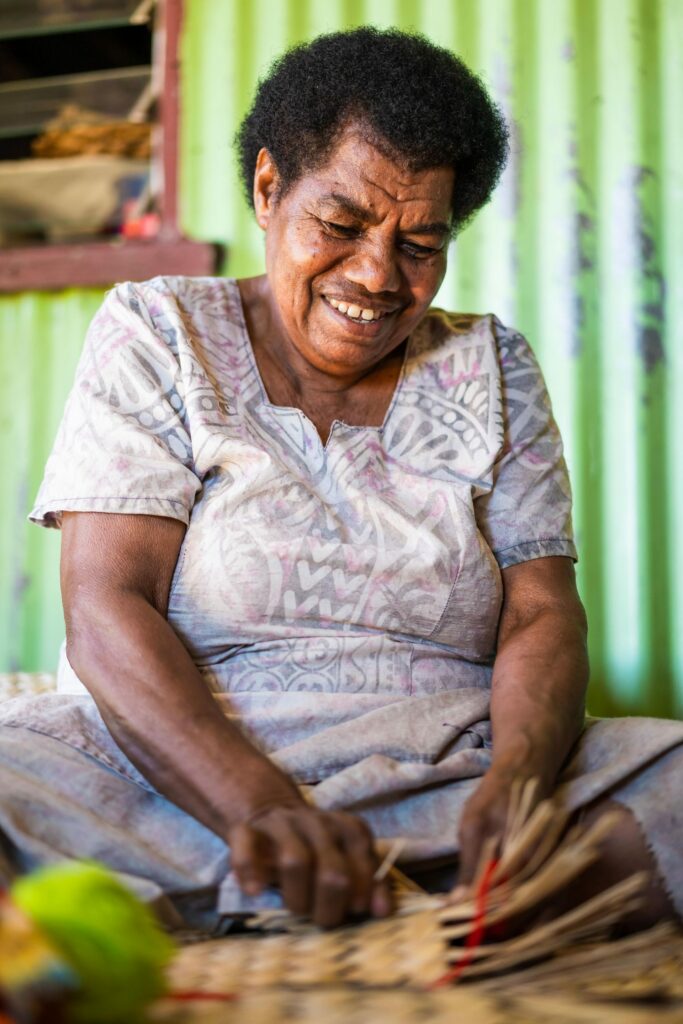
It is not unusual for a village to have an elected marama ni koro or ‘head lady’ to speak on behalf of the women of the village. She also heads up the meetings of the women in the village. Traditionally, women have less of a say in the workings of the village and are traditionally believed to belong to the domestic lifestyle, being the centre of the family. Times are beginning to change however with women gaining more independence by the day. It is also not unusual for villages to now have an elected youth representative and usually a board for the dominant church.
Check out this journal…
Understanding Fijian Women and their Spaces: A Fijian experience in the 21st Century
This journal goes into detail about the roles of women in Fijian society, their history and their future. It considers in particular ethnic Fijian women’s spaces in economic, social and political action.
Yaqona
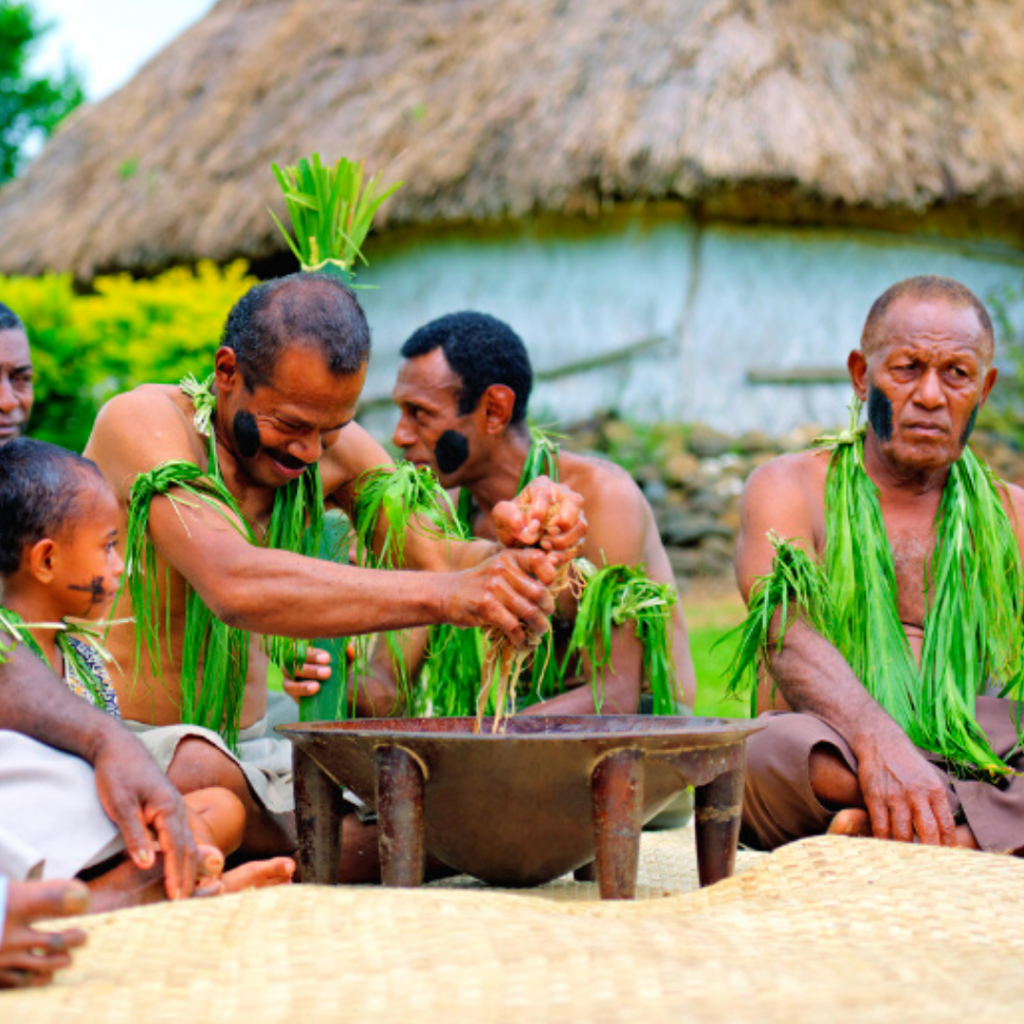
Yaqona (also known as kava/grog) is the traditional drink for communal occasions and ceremonies in Fiji. Years ago, it was saved only for certain ceremonies but today is drunk socially most days. It plays an essential part in Fijian society and daily lifestyle. Historically, the gods favoured this drink as a gift as do chiefs, presented as waka, its root form ready to be prepared. The presentation and drinking of yaqona signifies the highest respect and reverence for the chief.
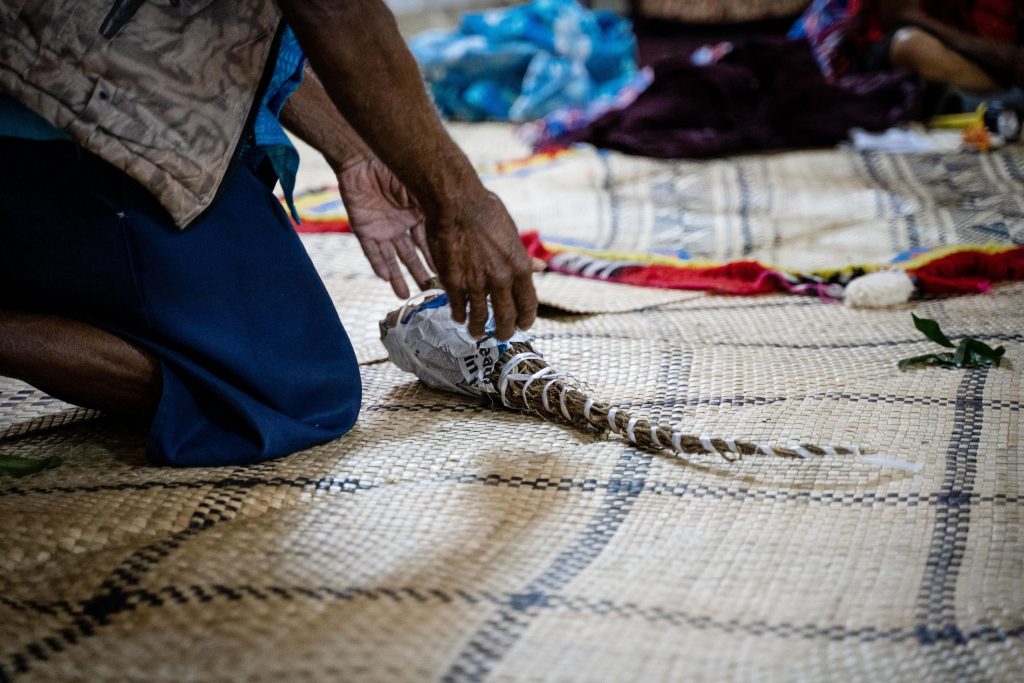
Yaqona, the drink itself, is made by brewing the pounded roots of the Piper Methysticum plant (a variation of a pepper plant). The plant takes years to grow and mature. It is then pulled from the ground and the roots left to dry in the sun. For the preparation of the drink itself, the roots are pounded to fine grains and this is then what is soaked into the water by the mixer.
Many South Pacific nations drink kava with varying methods of preparation, some nations have stronger varieties but Fiji’s is on the weaker side. Its introduction to Fiji was believed to come from the Polynesians. In Fiji, the drink is drunk from a bilo (a re-purposed coconut shell) and when drunk can have a numbing effect on the tongue. If you have copious amounts and depending on the strength of the mix, you may begin to feel a bit wobbly (but nothing major!) Fijians rave about its relaxing effect and its ability to send you to sleep in the evenings.
Watch this video
Here are a couple of Fijian comedians walking us through the drinking experience, but also the etiquette of what to do when in a kava session
In formal occasions, the process of mixing the yaqona is a prestigious matter. A man chosen for the job will sit cross-legged behind the tanoa (a large wooden bowl) which is used to mix the water and waka grain. Either side of the tanoa will sit two guards, traditionally expected to be guarding either side of the tanoa. The mixer faces the chief and accompanying elders who sit on the far side of the room; there is an invisible line that is cast by the tanoa in a room and anyone ‘above’ that line is considered a very important person. The elders and chief sit ‘above’ the tanoa, the chief directly in line with the topside of it (the most respected position) and the rest of the village sit ‘behind’ the tanoa and the mixer.
It is in official ceremonies like these where it is easiest to decipher roles in a village and to understand where people stand in the hierarchy of it. Once the mix has been blessed and is deemed strong enough by the chief’s spokesperson, the mata ni vanua, the first bilo is presented to the chief in an extremely respectful manner by an allocated server. Once the chief has drunk his bilo, the rest of the village drink in descending hierarchal order. Yaqona is served in rounds so once this first round is completed, the process is repeated when the next round is chosen to commence.
Some further reading…
Fijian Kava Ceremony
Kava in the South Pacific
A brief document on some further basics of Kava, learn more about an example of an official process of ceremony.
A detailed academic article subjected on the history and relevance of Kava in the South Pacific.