
Indigenous Fijian Skills
Thriving indigenous traditions have always played a major role in the lifestyle of a village. They survive as skills because they are incredibly practical! Some of these traditions stem from the ‘old ways’ and although sometimes syncretised with Christianity, attribute their structure to the very same traditions performed by their ancestors. Motifs of spirits, respect and mana all play essential roles in all proceedings.
Oral Tradition
Before the arrival of missionaries to Fiji in the early 19th century, nothing was written down in Fiji, it didn’t need to be! Traditional knowledge is passed on through word of mouth and living memory, and it has been for centuries… Unique skills are taught from generation to generation, not in schools but in the family/village. In Fiji, often, knowledge of traditional skills are hesitant to be shared – there is power and identity in knowledge which often distinguishes one region from another. Sharing knowledge of a skill can historically be treated as the giving of a gift.
Because information is transferred in oral tradition, the skills you are about to read about actually may appear very different depending on which region you visit. Each village may have their own unique approach to basket weaving, or their own meke. Who performs these roles is also dictated by tradition.
But a reliance on oral tradition does not come without its challenges; one of these is that it relies on the next generation being willing to learn these skills and become part of the system of transferring to the next generation. If this doesn’t happen, the skill is lost.
Traditional Knowledge
Because of this, elders are the most respected members of the community in rural Fijian areas – they have the most life experience and often possess the greatest understanding of these skills. Because the transfer of knowledge relies on stories and art expressions, the transfer of stories has remained unchanged for thousands of years meaning some of these stories are incredibly old! Fijian cosmology and explanations of origins, ancestors and correct behaviour today is intrinsically related to all aspects of Fijian culture and identity. Story telling is a key example of oral tradition which is completely concerned with origins and history. Have a watch of the video below, with Lulu sharing stories told to him as a child by the elders in his village in Moturiki:
Ceremony
Ceremonies are a key aspect of Fijian culture, steeped in historic importance and rooted in respect. There are many examples of ceremonies in Fiji and there are variations for how they are conducted across Fiji. As events, they are relatively unchanged from how they would look hundreds of years ago. They are a essential to the fabric of daily society in rural Fiji. Below are some examples…
Sevusevu
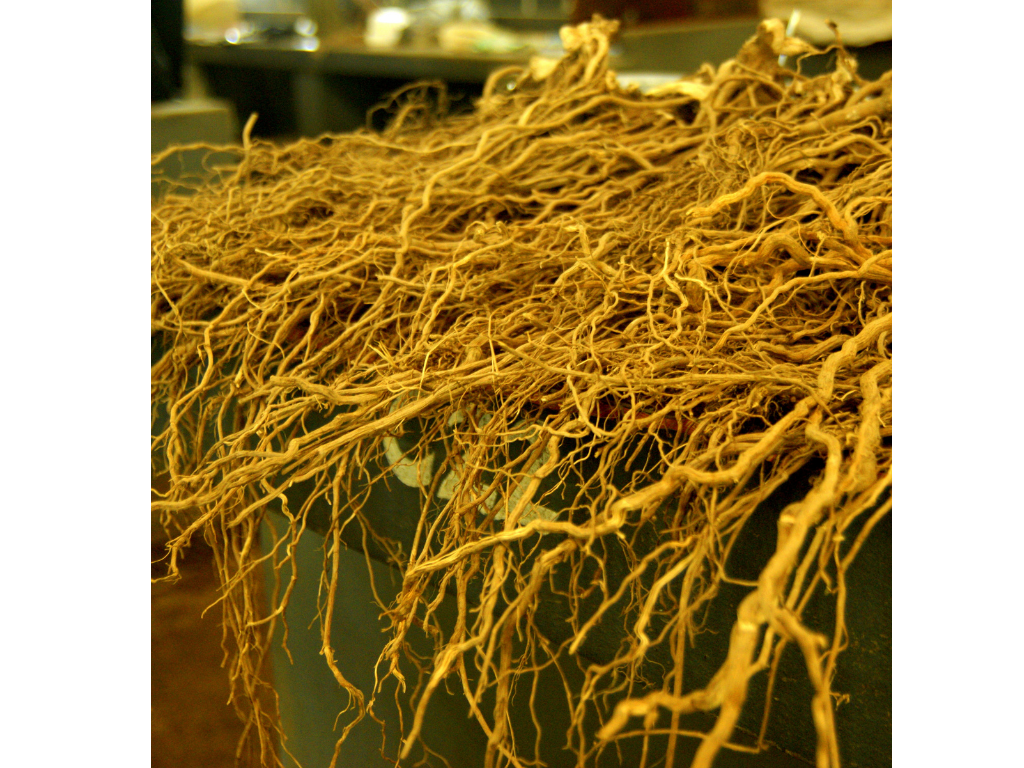
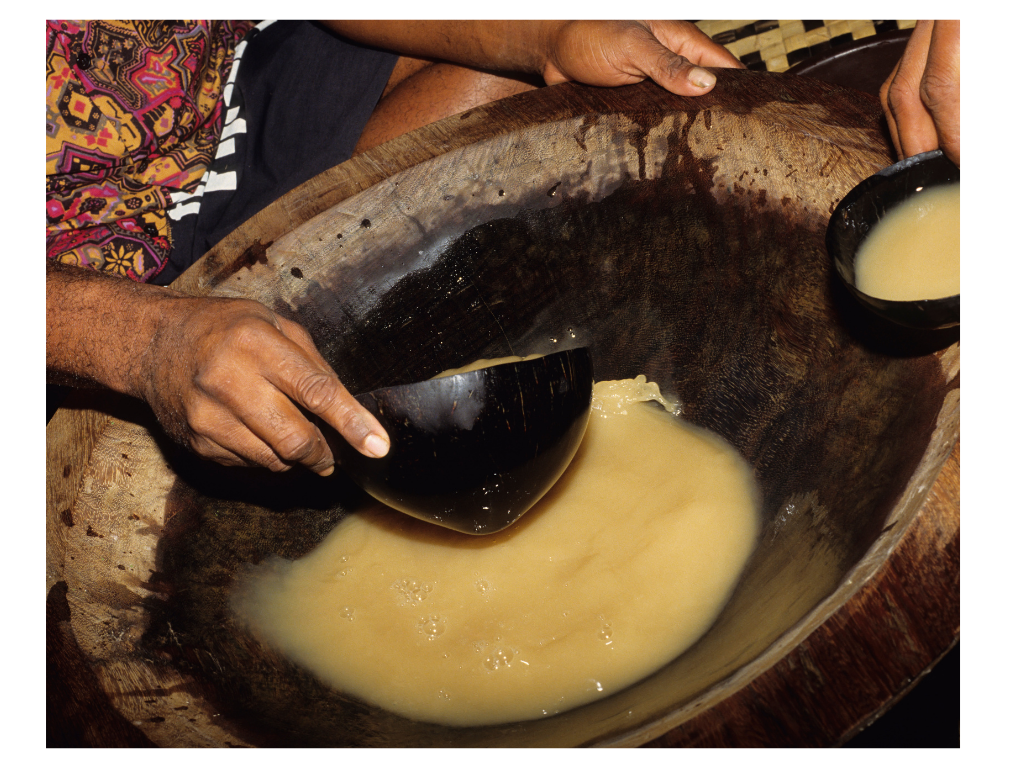
The sevusevu is a traditional welcoming ceremony in Fijian traditional (vakavanua) culture. The entire ceremony is centered on respect and the togetherness of Fijians. The visitor brings gifts to provide the chief, generally waka (the roots of kava plant) suffices and a formal ceremony involving the blessing, preparation and drinking of yaqona.
A speech is spoken by the turaga ni koro, the appointed headman of the village, and generally involves reaffirming shared values that Fijians are ‘like family’ and serve God. The speaker will often also start with ‘on behalf of’, indicating his belonging to the larger group which in itself is symbolic of the whole Fijian custom of sevusevu; it frames every interaction as one between two Fijian parties.
Once the speeches are finished, the yaqona is prepared. The chief will drink first followed by his spokesperson (mata ni vanua), then by the leader of the visiting party. Once the yaqona has been drunk in descending levels of hierarchy amongst the elders, the rest of the village may also drink.
A very formal sevusevu – This video shows a sevusevu featuring the current Fijian Prime Minister, Frank Bainimarama, and a guest. The sevusevu is not usually as lavish as this but here you can see how a ceremony might look and feel. This particular sevusevu, because of its prestige, features song and dance with the server dressed in masi.
Reguregu
Reguregu is the ceremony that precedes the burial of a member of a community. It is an opportunity for friends and family to pay their respects to the recently deceased through offering gifts of woven mats, tabua (whales tooth) and yaqona to the deceased. For prominent members of the community, a chief for example, a parade may take place to surrounding towns to offer opportunity for people to pay their respects. The gifts brought to commemorate the death are placed over the burial site. As with most traditions, each province has its own variation on proceedings.
Bulubulu
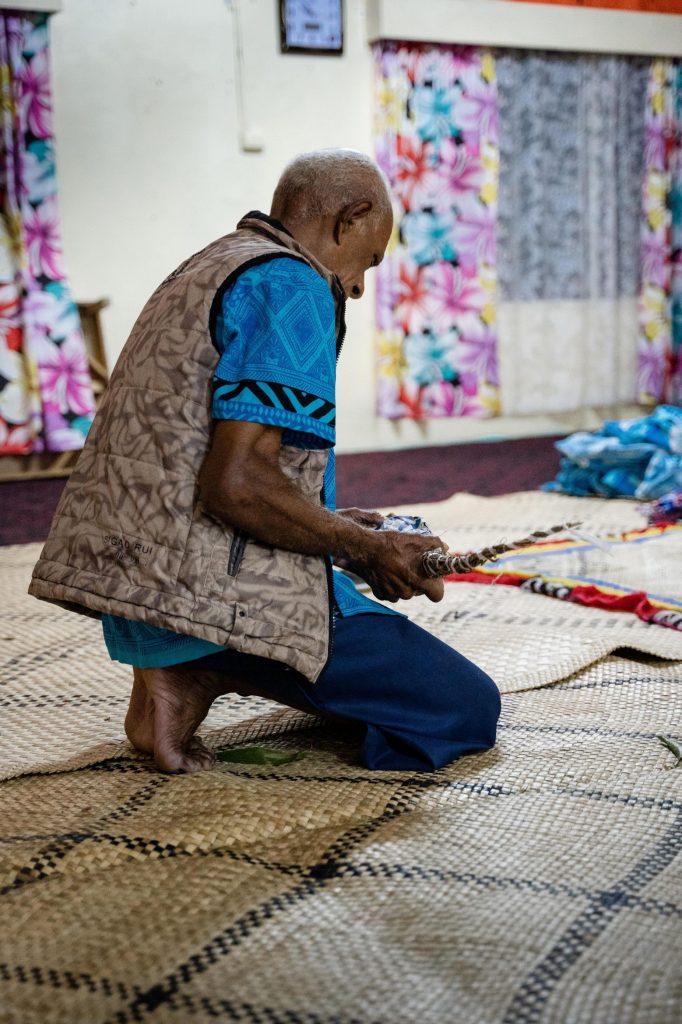
Bulubulu is essentially a ‘forgiveness’ ceremony, the word itself roughly translated to ‘cleansing’. Similar to the other ceremonies, the bulubulu is centred on gift giving from one party to the other. These gifts are again traditional items of value such as mats, tabua, yaqona or food. Bulubulu has real value in close-knit fijian communities where a strife would seriously affect daily proceedings of a village. On a practical level, the bulubulu assures the restoration of harmony to the dealings between families and villages.
A common event for a bulubulu to take place is between families who are associated with a young couple who have ‘run off’ in secret to be together, or when an unwedded woman bears a child in a relationship. The ceremony will involve the ‘forgivee’ visiting the village of the forgiver often accompanied by family members and other members of the village (who come along for the party). The gifts are presented and words are spoken from both sides and once the ceremony is finished, the ‘misconduct’ is wholly forgiven.
Handicraft
Handicraft skills are common across Fiji and involve the the use of raw materials to create useful and traditionally valuable items. Ancient handicraft skills are not only valuable in their cultural significance, they still remain a part of life because they are extremely practical! Although, certain handicraft is more skilful and well respected.
“While other countries such as Tahiti and Hawaii are experiencing a revival in traditional arts, Fiji has no such contemporary movement – the reason being, for the most part, that Fijians retain a great deal of their cultural heritage. That’s not to say, that traditional art, such as mat weaving and masi making are as prolific as in former times. As the population increasingly moves from rural to urban areas and social media engages sucks available bandwidth, young people simply aren’t taking the time and effort to learn the old art forms.”
Albert J. Schütz, 2018
Here are some examples below of some of the more major skills you may come across in Fiji, and may even one day be lucky enough to learn:
Mat Weaving
Mats weaved from pandanus leaves are an extremely functional and extremely common feature of a Fijian household or building. The leaves are prepared first by boiling them and then leaving them to dry in the sun. The mats are intricately woven in particular and repeating patterns with stripped thick threads from the dried leaves.
They have been used throughout Fiji’s history as valuable gifts. They are time consuming to make, the making of it often consists of multiple women sitting in one room and working on a single mat for days on end. How to make:
Basket Weaving
Baskets are woven from fresh coconut leaves to create functional and strong baskets for daily use. Often they are used to bring in produce from the farm or to transport goods to the markets.
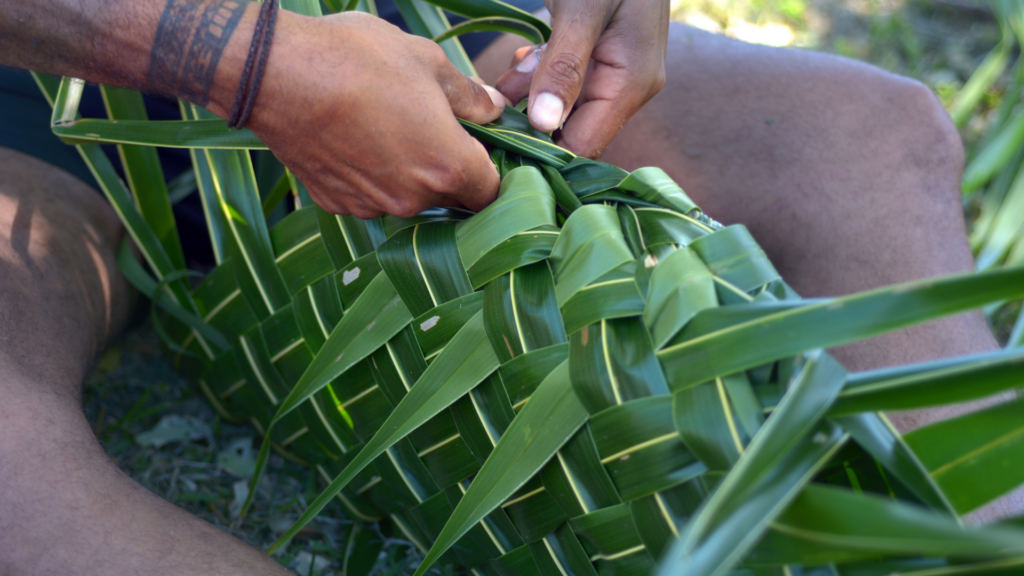
Tutorial – Here’s Lulu giving us a tutorial on how to begin weaving a Fijian basket, in his socks and all! This is quite a common skill although is much more common in locations by the coast due to an abundance of resources (coconut trees).
Fans
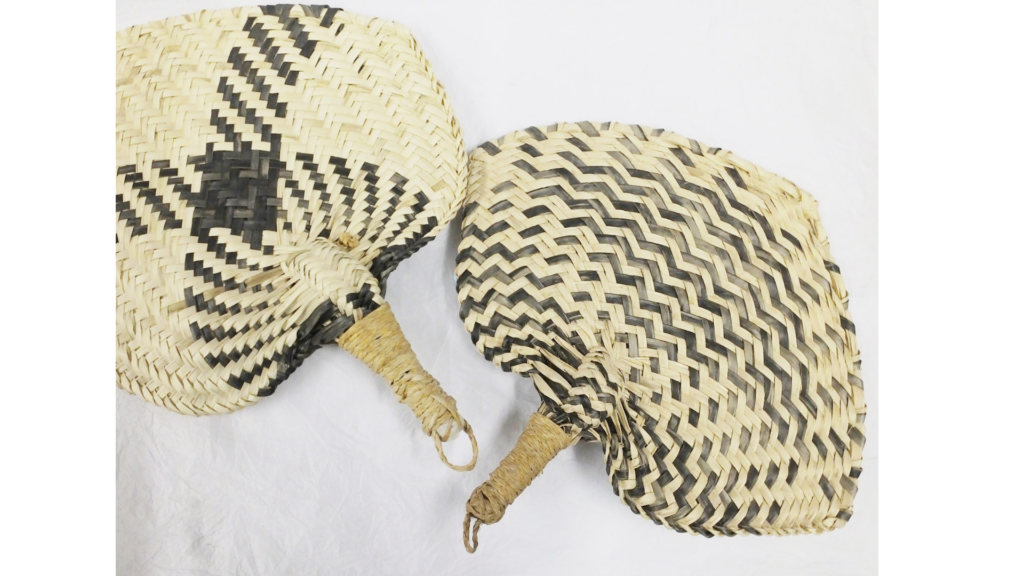
Fans are a very common skill, although they come with a huge amount of variety! Fans are used in the way you’d expect, Fiji gets hot! But they also are used as props in certain forms of meke (traditional dance) and due to being so customisable, make great gifts as well.
Wood-Craft
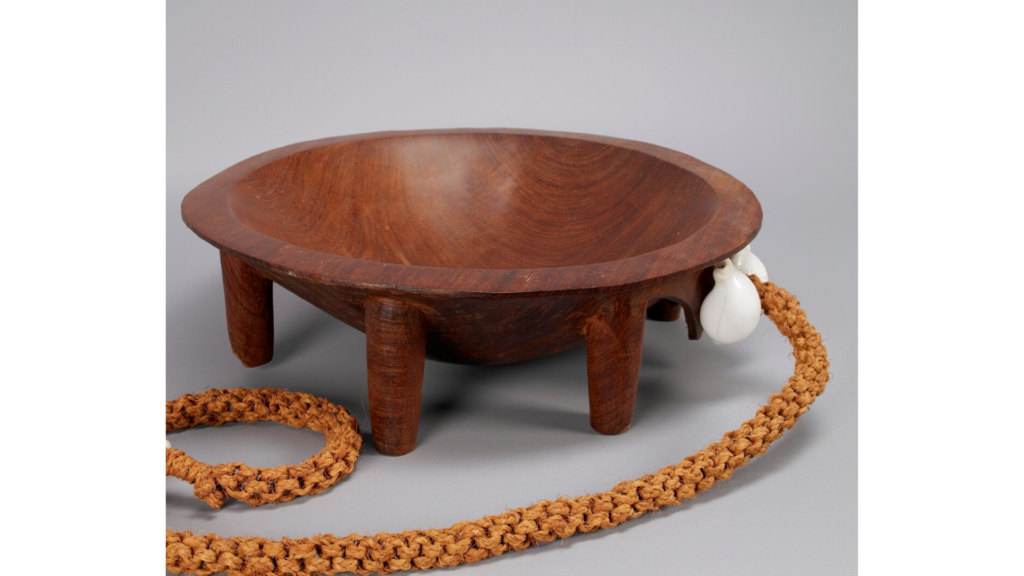
Wood-craft is one of the most respected skills in Fijian tradition, it was so specialised that in some communities there is a mataqali solely for this skill. Items produced still hold incredible cultural value. In past times, certain artists were so specialised that they only produced one particular type of artefact. The matai, or craftsman, would respond directly to the chief and carry out requests upon his wish. Examples of items that traditional craftsman would create would be the tanoa, drua, lali, war club, chiefly combs and other household items.
Tourism has encouraged an increase in the interest in these skills, with tourists often bringing with them demand for Fijian-made souvenirs. This is great, but those mass produced items are not at all the same as authentically created items for use for the chief or community. Such items are believed to possess mana, a certain power that souvenirs created for tourists can not have.
Masi
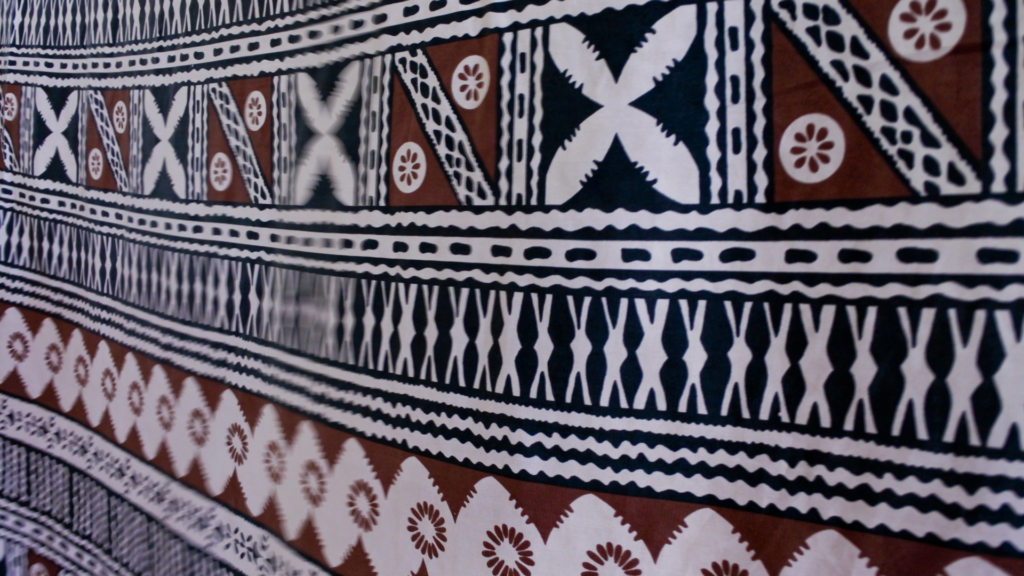
Masi or tapa is a cloth like material that has an essential part of traditional formal ceremonies in Fiji, whether it be an official sevusevu for a revered guest or worn as part of a 21st birthday celebration or wedding. Each family may own one particular masi that is used on multiple occasions as they are quite rare and expensive today. The masi itself is created from the bark of a mulberry tree. The bark is stripped from the tree, soaked to soften and pounded by mallets to flatten. The now thin and fibrous material is left to dry in the sun before the pattern is applied.
Intricate decorative designs are then applied to the masi cloth, differing between regions. Sometimes the pattern might include images of turtles or fish. They can be decorated with paint or dye from mangrove roots, they can be stenciled or even smoked.
Sadly, masi production is in decline in Fiji. It’s almost exclusively from the island of Vatulele
Meke
The meke is the traditional dance of Fiji. The meke tells a story, whether it be the history of the village/family or even the ancestors. It is in this oral tradition that history was recorded in Fiji. The meke is performed separately by men and woman, having different dances for each. The male meke is often a display of strength and power, the female meke a display of grace. The dance is accompanied by a rhythmic song sung by members of the community to the rhythm of a lali ni meke drum.
Origins and Purpose
Traditionally, Meke are performed occasionally and certainly not as regularly as we experience them today due to their significance and purpose. They are a pillar of a special occasion, and often contain important history or foresight for the future. They are mainly composed by the ‘dau ni vucu’ a traditional composer, who has traditional skills of composing the song forms of meke, vucu or vakavunigasau. In ancient times, it may be the village priest (bete) who receives the moves for the dance directly from the gods. These can contain foresights or a story of local history.
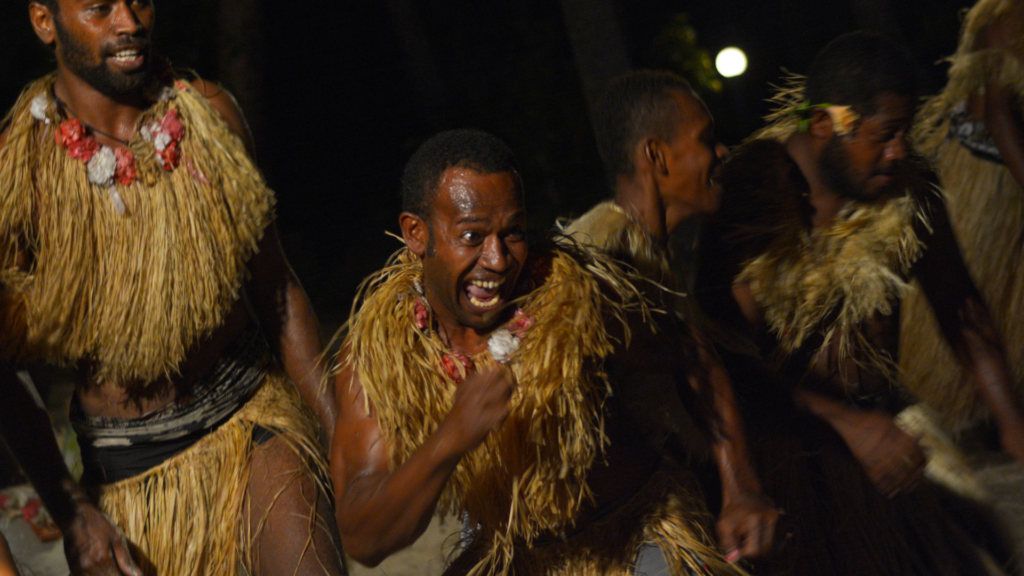
Therefore, meke as an art form becomes a living archive of history. Each is visual storytelling alongside the lyrics of the song, with every dance move reflecting the words sung. And there are many different types based on who is dancing them, for what occasion and from what region: