

Development Theories
International Development is a big subject and the intentional analysis of how and why countries should promote certain approaches and ways of thinking about Development has only really surfaced since the 1950s. How we think about development is important to understand as it shapes the way we think about others in international transactions, underpins power dynamics globally and is essentially the study of what we value as a global society. This section explores just that.
The Development of Development Theories…
Sustainable Development may be something you have heard of before, but it wasn’t always a theory! It is the culmination of many years of Development theories after they have been refined and tested after years of social pressure and scholarly examination.
Have a watch of this great little video that describes how thoughts surrounding ‘Development’ have changed over the years to the point where we are now; the concept of Sustainable Development.
So… to summarise in brief:
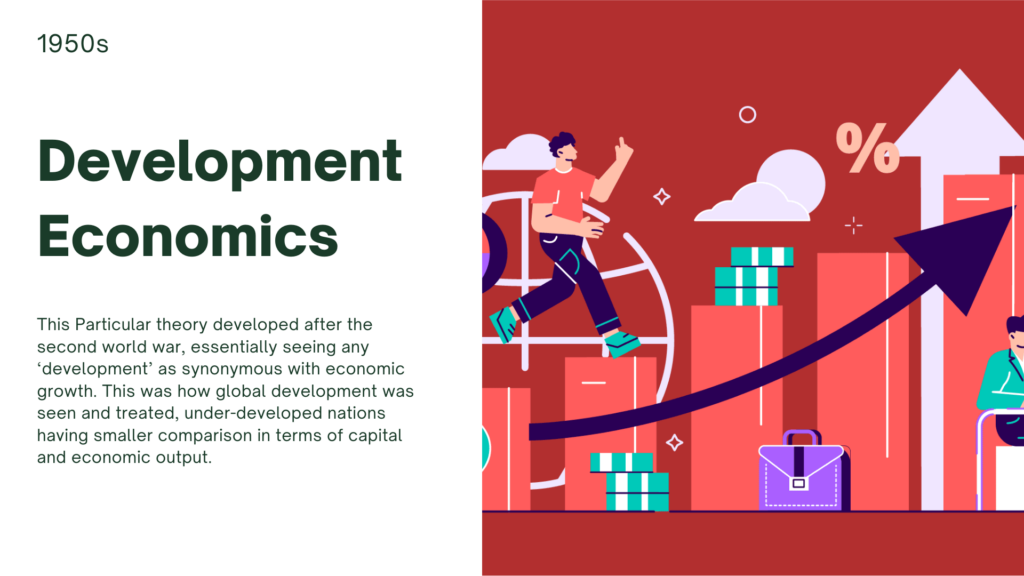

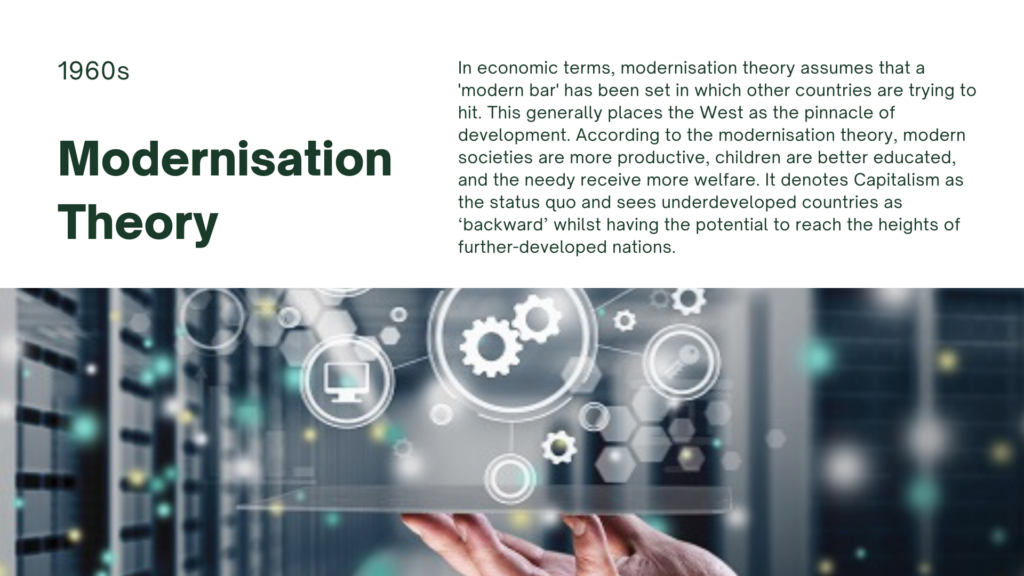
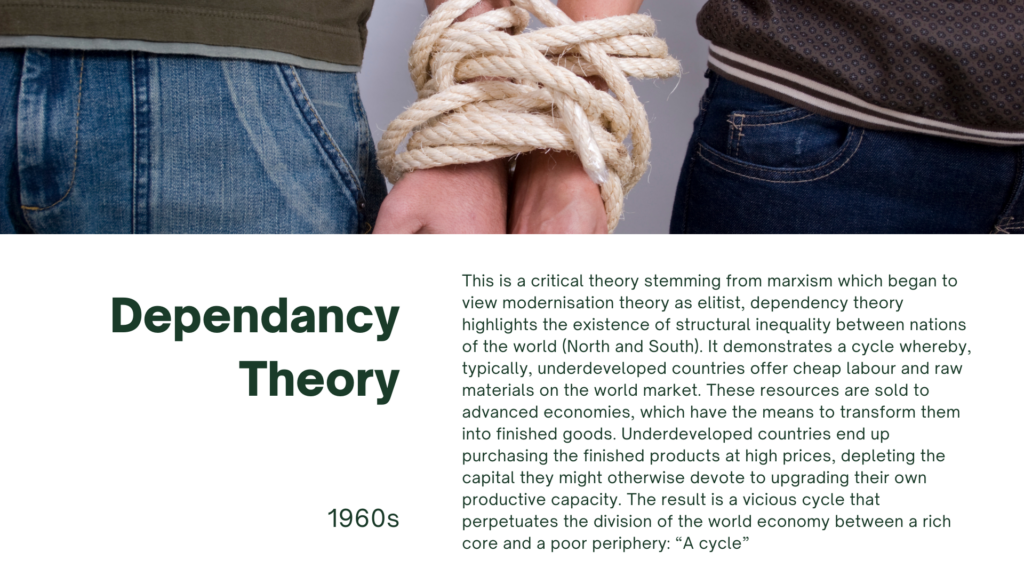
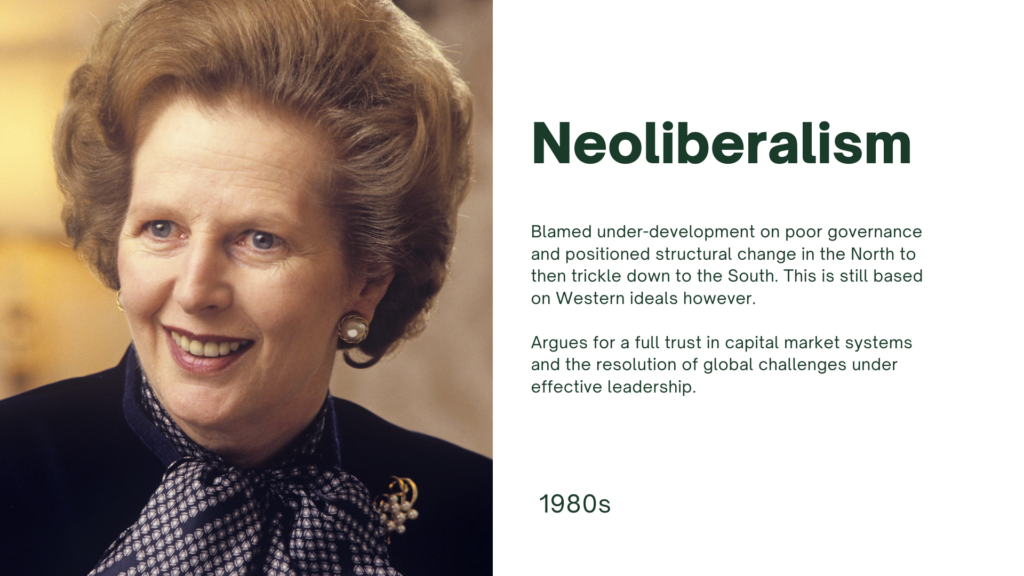
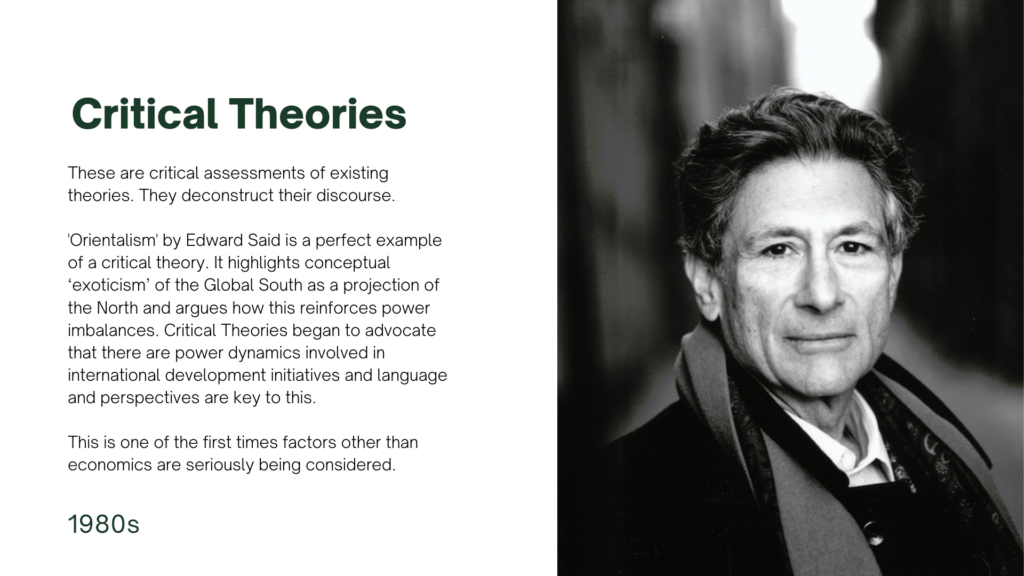
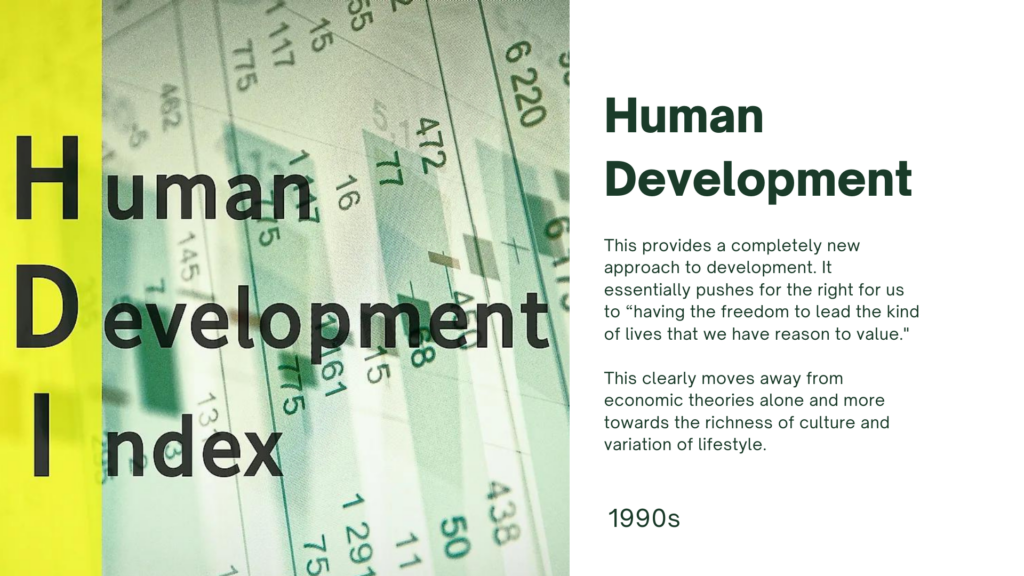
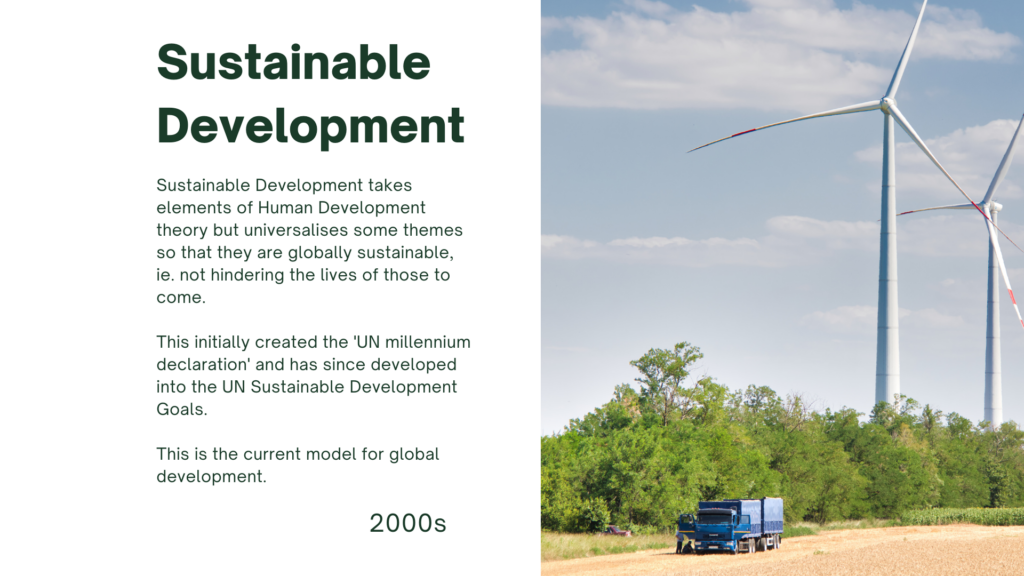
For a more an even more in-depth study on the events that have led to sustainable development, have a read of this article:
‘Sustainable Development’ in Detail
Sustainable development is currently regarded as the most appropriate model for global development. We have looked a little into this in this Global Skills course already, but it’s time to dive a little deeper into where this comes from… below is a detailed timeline of the events that led to the SDGs.
Sustainable development is the overarching paradigm of the United Nations. The concept of sustainable development was described by the 1987 Bruntland Commission Report as “development that meets the needs of the present without compromising the ability of future generations to meet their own needs.”
“A concept that is used to describe community and economic development in terms of meeting the needs of the present without compromising the ability of future generations to meet their needs.”
“There are four dimensions to sustainable development – society, environment, culture and economy – which are intertwined, not separate. Sustainability is a paradigm for thinking about the future in which environmental, societal and economic considerations are balanced in the pursuit of an improved quality of life.” UNESCO
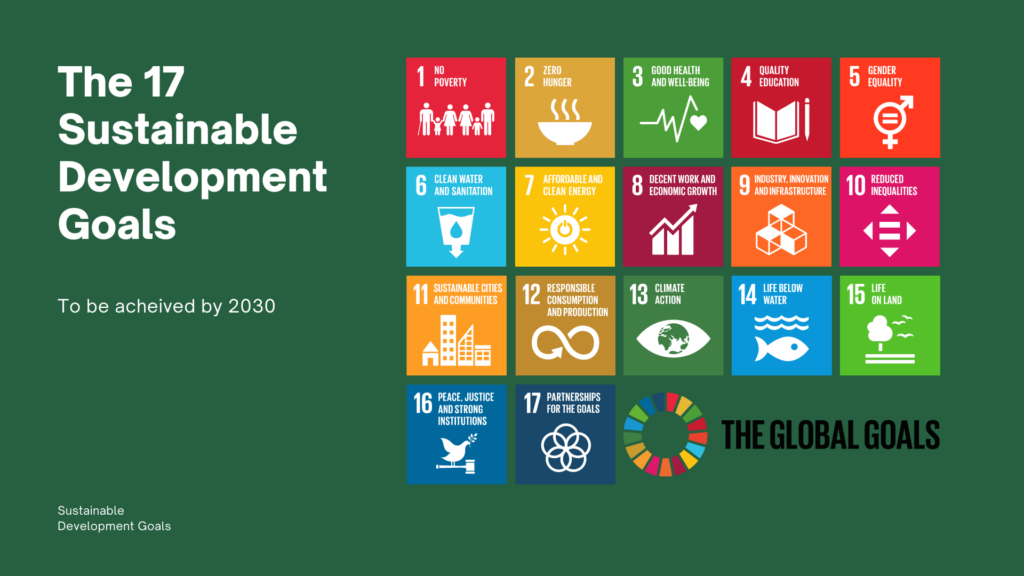
The 2030 Agenda for Sustainable Development, adopted by all United Nations Member States in 2015, provides a shared blueprint for peace and prosperity for people and the planet, now and into the future. At its heart are the 17 Sustainable Development Goals (SDGs), which are an urgent call for action by all countries – ‘developed and developing’ – in a global partnership.
17 SDGs, 169 targets, 3155 events, 1319 publications, 6011 actions
- How is Sustainable Development a shift from an economic focus to a societal focus?
- Why have these shifts in thought occurred throughout the years? Does it Matter?
- Have we reached a finish line in regards to how we view appropriate global Development?