
The 6 Focus Areas
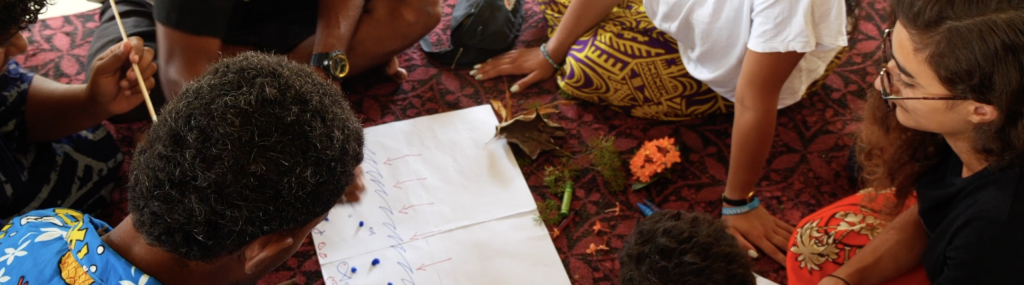
The Youth Empowerment Workshops focus on 6 key focuses areas as listed below. During your time in the village, each of the areas below will take up two sessions each. The session plans you are delivering are designed in collaboration with our partners and their aims, the material itself being tailored to the setting of the project – engaging workshops activities that provide a platform for all to learn about different perspectives and understand their own more clearly. The sessions boost self-confidence and soft skills for all involved and empower the leaders of tomorrow, including yourselves.
Although you will find out the workshop content in Fiji during your briefing, and actually facilitate the sessions in small groups alongside Fijian youth members, below are some overview points explaining what we mean by the subject and a little bit of context as to why that focus area has been prioritised in Fiji.
1. Physical Activity
Physical activity encompasses the use of sport (and its general development in rural areas) but also the healthy lifestyle associated with activity.
The welfare of youths in the country is one of Government’s priorities and one of its main focuses is to see young Fijians treated fairly as part of its commitment to an inclusive policy for all Fijians regardless of ethnicity, social background, and status in the community, culture or religious beliefs. To address this with young Fijians, government through the Ministry of Youth and Sports has put in place opportunities for our youths to be empowered and self-sustainable through the Ministry’s mobile and specific Skills, empowerment and capacity building training programmes.
Outreach programs such as the one you are joining fill a gap and addresses youths that have not made it in the formal education sector. To complement this the Ministry of Youth and Sports focuses on the facilitation of youth and sports development through the establishment of a conducive policy environment that provides strategic support systems, initiatives for personal development, character building, sports policy implementation and community-based youth-led programs. Our youth empowerment project sits within this space as an outreach opportunity, using sport as a tool in the holistic approach to youth empowerment and the movement towards the aims outlines in The Healthy Islands Initiative.
The Healthy Islands Initiative
Non communicable diseases (NCDs) in Fiji is the number one killer. In order to address NCDs, the initiative focuses on young people to achieve prevention and protection. The seven action areas include financial, political, economical, physical, social, mental, and spiritual well-being.
In order for the programme to work, it must be hollistic. It looks at lifestyle and living conditions suimultaneously, rather than binarising physical, mental, social, economic, and spiritual factors. Addressing preventative factors aims to reduce dependency on medication. Sport and physical activity in rural communities is therefore a key strategy within the lifestyle space as a prevention measure for potential feature NCD cases and halting alarming statistics trends.
Hear Manasa Seniyasi, former Advisor for the Ministry of Health in Fiji and current trustee of the Think Pacific Foundation, talking about the origin of the Health Islands Initiative.
2. Environment and Climate
Environment and Climate is another major theme that immediately affects Fiji and one that the Ministry of Economy is very keen to stimulate further awareness and discussion amongst youth in Fiji, not only those going through higher education but also those in rural communities who are just as affected, if not more disproportionately affected by climate change.
As a Small Island Developing State, Fiji is severely impacted by both the slow and sudden onsets of climate change induced by global dependence on unsustainable fossil fuels. Rising sea levels engulfing low-lying coastal communities, saltwater intrusion reducing arable land, changing weather patterns impacting food security, and catastrophic cyclones reversing years of development progress while threatening fiscal stability are some of the major climate-induced adversities Fiji faces. These adversities tremendously impact sustainable livelihoods, security and well-being and contribute to an increased incidence of poverty and undue pressure on social services. Below are just a few of immediate factors that affect Fiji particularly:
- Rising Sea Levels
- Saltwater Intrusion
- Increased Flooding
- Ocean Acidification
- Catastrophic Cyclones
- Loss of Bio-Diversity
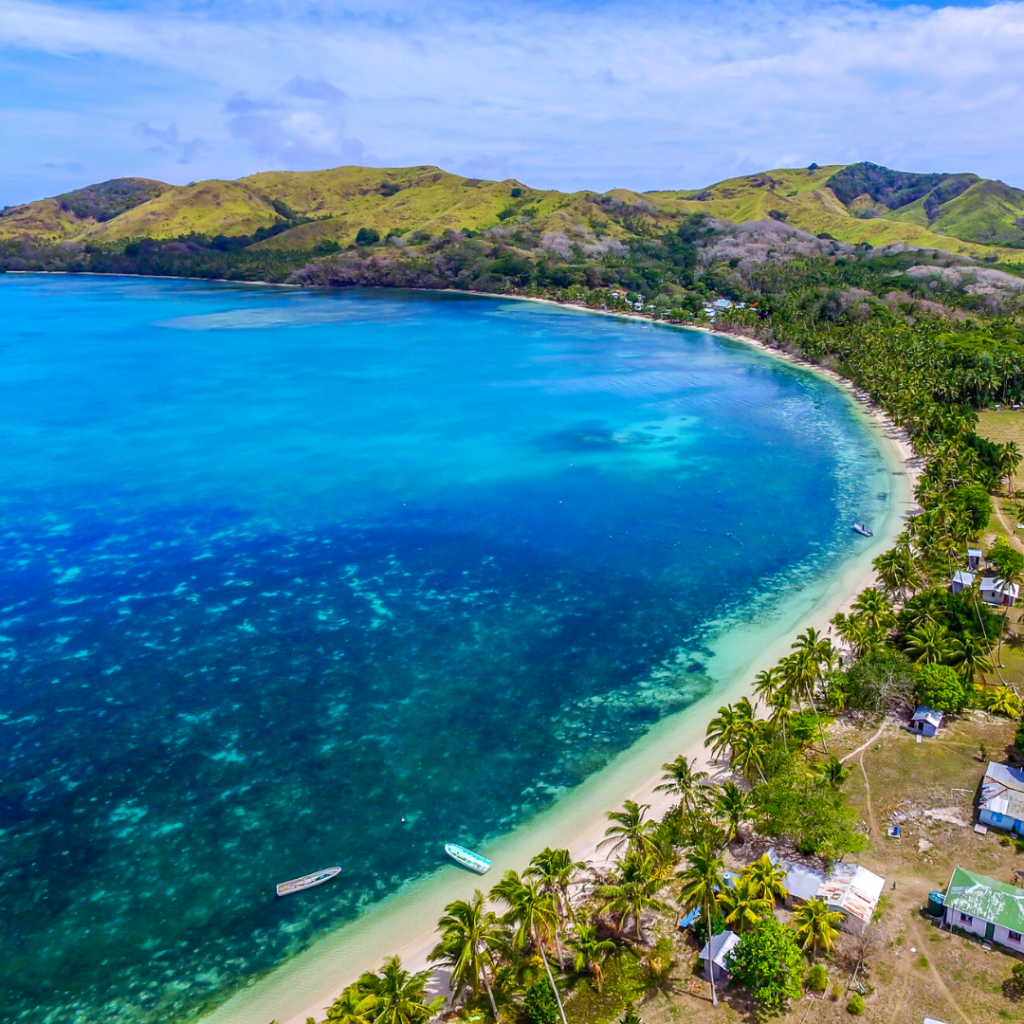
Discussing perspectives on climate change is important as people are affected and aware of it in different capacities but all need to be change makers moving forward in attitude and action. Within these discussions, you as an international participant will have a very different relationship to climate change in regards to your understanding and encounters with it. You will come from a country that is likely a higher emitter of greenhouse on the global stage than Fiji and you yourself will likely have a much larger carbon footprint than those who are living relatively sustainably in rural communities in Fiji. But that is why a cross-cultural and cross-societal discussion becomes so interesting and important. Individuals can look each other in the eye and understand what is a global challenge from different perspectives, with all learning and all understanding their place in the bigger picture of a what is a global threat.
3. Leadership
At its core, across all the focus areas listed here, the Youth Empowerment Project is about empowering young people to be passionate and confident leaders in their own communities. The leaders ship section of the Youth Empowerment Project hones in on the more specific skills associated with being an affective leader and contemplates it in different contexts. It aims to make people think consciously about their own development within leadership potential.
There are two major areas that we focus on in the sessions: What is leadership and Becoming a Leader
In addition to the major focus of these sessions, an underlying subject is leadership with a strong Cultural IQ. The world is becoming ever more connected meaning that in our working lives we are exposed to an increasing variety of people and cultures. With this increased connectivity we are ensuring more equal representation in decision making positions and can therefore develop a world which is inclusive of people from all backgrounds, races, genders and sexualities. This poses a new challenge to leaders. Whilst it is not expected that leaders must understand the norms, values and practices of ALL people, there are skills which can be developed amongst leaders to ensure their leadership style transcends and respects cultural nuances. The structure of this project lends itself to this.
Interested on hearing more about Leadership stimulation in Fiji? Get a head start by hearing from our partners ‘Leadership Fiji’:
4. Enterprise
Much of Fijian economy stems from entrepreneurial effort and income in rural areas is predominantly through the buying and selling of produce and through the efforts of small community businesses. The likelihood is that the young people you will be working with will grow up to work in this space if they don’t already and it is beneficial to engage in consciously thinking about the skills that are required in business.
Retaining skilled individuals in the business space is also critical for Fiji’s wider economic growth, especially if capacity in rural areas is utilised. Increasingly over recent years, there has been an increase in the number of Fijian’s going to work overseas in countries such as Australia. Whilst some individuals on the scheme have demonstrated success, others have questioned the true impact that this employment has.

In their 2011 quarterly review the Reserve Bank of Fiji released figures which showed that between 1987 and 2001, 75,800 people had left Fiji. 571 skilled workers migrate from Fiji every year. In countries such as Australia, where the minimum wage is more than 10x the Fijian minimum wage, even Fiji’s high-skilled workers are leaving to work in low-skilled roles overseas, resulting in a depleting workforce back in the islands.
Within the workshops, you will consider just how important context is to the success of a business and assess barriers to growth and start-up in different contexts, both Fijian and Global.
5. Mental Health
Mental Health is a taboo subject in Fiji and is often misunderstood and heavily stigmatised.
The discussions and activities in the workshops themselves themselves are taking place on behalf of our partners who are utilising international participants as a fantastic opportunity for these discussions to take place whilst also using the project itself as an outreach for existing initiatives. We explore new perspectives, ideas and activities to promote positive mental health. In line with the Fiji National Development Plan, and organisations such as Youth Champs 4 Mental Health, the long term aim is to equip Fiji’s youth with the tools to be ambassadors for mental health awareness, understanding and support in their communities.
Misconceptions and misinformation can promote fear and shame associated with mental illness. This stigma can cause young people to lack help in seeking the support they need, or lead to negative coping mechanisms when dealing with stress. The age old saying “prevention is better than cure” is especially true when resources & training for ill-mental health are low on the ground. In Fiji today there remains just one psychiatric facility and just 3 doctors with postgraduate mental health training. Meanwhile, suicide rates in Fiji are concerning and continuing to rise.
Mental health is much more than the absence of illness, and anyone can experience challenges to their mental wellbeing. However, 42% of Fijians said they would be put off seeking any help due to embarrassment (Aghanwa 2004). If local mental health ambassadors can influence attitudes and understanding, then they can break the stigma surrounding discussing mental health.
Hear Matthew from Youth Champs 4 Mental Health explaining more about the subject regarding young people in Fiji and how these projects are useful strategies to open up the conversation.
6. Public Health
The Public Health Workshops aim to increase awareness in a country with the highest rates deaths related to NCDs in the world.
You will be joining this initiative which is in collaboration with and on behalf of Diabetes Fiji, striving to achieve a healthier environment and education for people with or at risk with diabetes. The vision for the project is that people living with or at risk of Diabetes are empowered to take ownership of their health and adapt a healthy lifestyle.
The discussions and activities themselves are taking place on behalf of our partners who are utilising international participants as a fantastic opportunity for these discussions to take place whilst also using the project itself as an outreach for existing initiatives, tailored to guide everyone involved to reflect on important topics and become leaders within their communities.
You’ve heard about the Healthy Islands Initiative before, but hear Manasa talking about the ‘7D Process’ in a lot more detail. How the Health Islands Initiative goes from idea to implementation. As an official outreach project for the initiative, our projects utilise each of these processes.
If you wanted to read more, you may be interested in Fiji’s National Wellness Policy which also direct the Health related focus areas in this project.